
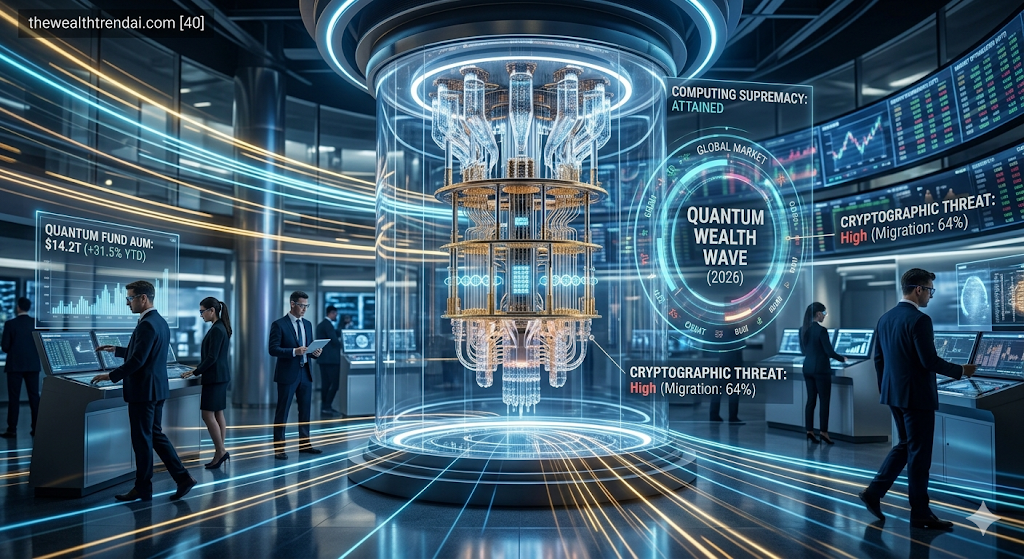
By mid-2026, the boundaries of digital wealth are no longer defined by traditional silicon chips. A silent revolution is taking place in the server rooms of Wall Street and tech monopolies: Quantum Computing has officially achieved financial supremacy. The ability to process complex algorithms in seconds—tasks that would take classical supercomputers millennia—is shifting trillions of dollars in market value.
The Death of Traditional Risk Management
In 2026, quantitative hedge funds equipped with quantum processors are operating on a completely different level. Traditional algorithmic trading relies on historical data and probability, but quantum algorithms can simulate thousands of global economic scenarios simultaneously. This allows institutional giants to predict market crashes, supply chain disruptions, and currency fluctuations with near-perfect accuracy, effectively eliminating risk for those who control the hardware.
Cyber Security and the $2 Trillion Cryptographic Threat
The rise of quantum computing in 2026 has also forced a massive restructuring of global cybersecurity. Early quantum systems have demonstrated the theoretical capability to crack legacy encryption protocols. As a result, a multi-trillion-dollar migration toward “Quantum-Resistant Cryptography” is underway. Every major bank, sovereign wealth fund, and tech giant is scrambling to upgrade their defenses, creating an unprecedented boom for specialized quantum security firms.
Conclusion
We are standing at the edge of the “Quantum Divide.” Investors who position themselves in quantum infrastructure, software, and security today will control the capital of tomorrow. In the financial landscape of 2026, knowledge is no longer just power—quantum computing speed is the ultimate wealth creator.