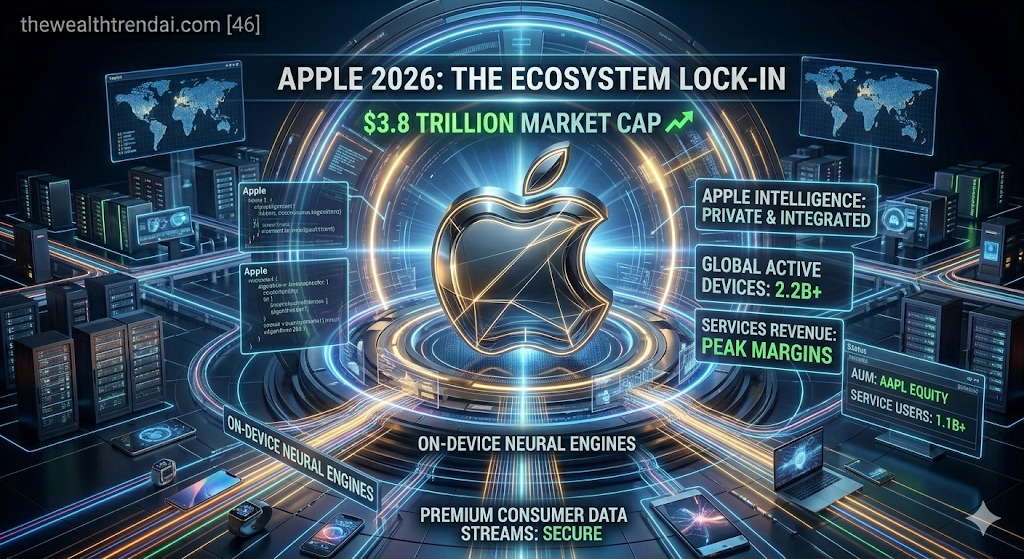
While open-source frameworks and massive enterprise data centers dominate the corporate AI discussion, Apple has silently captured the most lucrative sector of the market: the premium consumer. In mid-2026, Apple has successfully turned its massive hardware footprint into an elite, private artificial intelligence ecosystem, solidifying its multi-trillion-dollar dominance.
The Apple Intelligence Network Effect
Apple’s core strategy in 2026 does not rely on building the largest cloud data centers, but rather on utilizing the dedicated on-device neural engines embedded in over a billion active iPhones worldwide. By keeping artificial intelligence local, private, and deeply integrated into iOS, Apple has made high-end digital privacy a luxury commodity. Consumers looking for secure, private AI automation are forced to upgrade to the latest premium hardware, driving massive device upgrade cycles.
The Services Revenue Machine
Beyond selling premium hardware, Apple’s true financial engine in 2026 is its thriving Services ecosystem. Through premium subscriptions for advanced hybrid AI features, exclusive cloud processing options, and its lucrative platform marketplace fees, Apple has built a predictable, high-margin revenue loop. This unique combination of high-end hardware sales and software lock-in makes its cash flow one of the most reliable and highly protected in the global market.
Conclusion
Apple has proven that controlling the consumer device layer is just as powerful as controlling the underlying computing cloud. By turning artificial intelligence into a personal, integrated luxury experience, Apple guarantees its long-term corporate valuation. For investors seeking premium capital stability and strong consumer loyalty in 2026, Apple remains an unassailable financial pillar.