
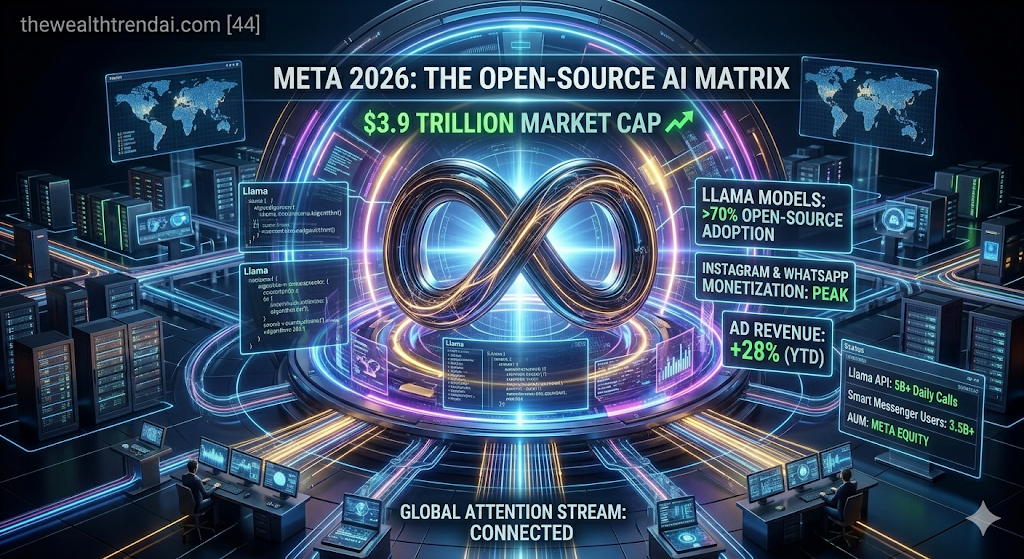
In the hyper-competitive tech landscape of mid-2026, Meta has pulled off one of the most brilliant strategic pivots in corporate history. By championing the open-source artificial intelligence movement with its dominant Llama models, Mark Zuckerberg’s empire has effectively neutralized proprietary AI rivals while strengthening its absolute monopoly over global digital attention and advertising wealth.
The Llama Open-Source Network Effect
Meta’s genius in 2026 lies in giving away its foundational AI software for free. By making the Llama architecture open-source, millions of developers worldwide are optimizing, debugging, and building applications on Meta’s framework. This massive global ecosystem forces the entire tech industry to adapt to Meta’s standards, effectively commoditizing the underlying software and leaving hardware and deployment layers as the primary profit centers—where Meta is heavily invested.
Monetizing the Smart Messenger Ecosystem
While the open-source strategy secures tech dominance, Meta’s massive cash generation comes from the deep AI integration into Instagram, WhatsApp, and Threads. In 2026, over 3.5 billion daily active users interact with hyper-personalized AI avatars, automated business agents, and ultra-targeted generative video ads. WhatsApp Business has transformed into the primary commerce operating system for small and medium enterprises globally, driving unprecedented margins in ad-click revenues.
Conclusion
Meta has successfully shifted from a standard social media conglomerate into an infrastructure-level AI powerhouse. By controlling both the open-source software standard and the global consumer attention span, Meta represents a highly resilient, high-growth engine for modern investors looking to capitalize on the next wave of internet monetization.