
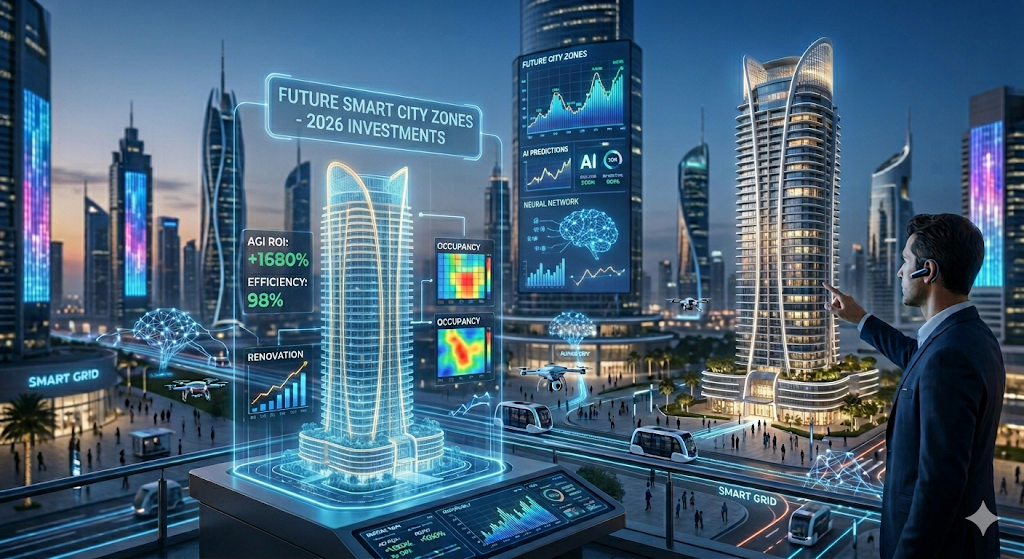
By May 2026, the global real estate market has undergone a radical transformation. We are no longer just buying land or concrete; we are investing in “Intelligent Infrastructure.” From the smart districts of Dubai and Singapore to the emerging decentralized “Meta-Cities,” Artificial General Intelligence (AGI) is the new architect and property manager.
Predicting the Next “Hot Zone”
Gone are the days of relying on gut feeling or lagging market reports. Today’s elite investors use AGI algorithms to predict urban growth with 95% accuracy. These systems analyze satellite imagery, energy consumption patterns, and shifting workforce demographics to identify undervalued neighborhoods before they hit the mainstream news. If the AI sees a surge in fiber-optic demand and autonomous transport hubs, the “Buy” signal is triggered.
The Rise of the “Digital Twin” Economy
Every premium physical property in 2026 now comes with a Digital Twin. This is a virtual, high-fidelity replica that exists on the blockchain. Owners can simulate renovations, calculate energy efficiency via AI, or even monetize the virtual space for global events while living in the physical one. This dual-ownership model is doubling the ROI for early adopters.
Autonomous Property Management
Maintenance is no longer a headache. AGI-driven building systems now predict repairs before they occur. Elevators, climate control, and security systems are managed by neural networks that optimize for cost and comfort. For the absentee landlord, this means a truly “hands-off” passive income stream that was impossible a decade ago.
Conclusion: The Smart Capital Move
As we move toward 2027, the gap between “dumb” buildings and “smart” assets will widen. Investors who pivot their portfolios toward AI-integrated real estate are not just buying a home; they are buying into the nervous system of the future city.